

The Lab Years
I spent eight years as a research specialist in cancer biology. University of Wisconsin first, bladder and prostate cancer, then the University of Virginia, breast cancer. The work was methodical and collaborative and genuinely important, and I was good at it. We published. I understood how to read data, how to question a result, how to hold a hypothesis loosely until the evidence said otherwise.
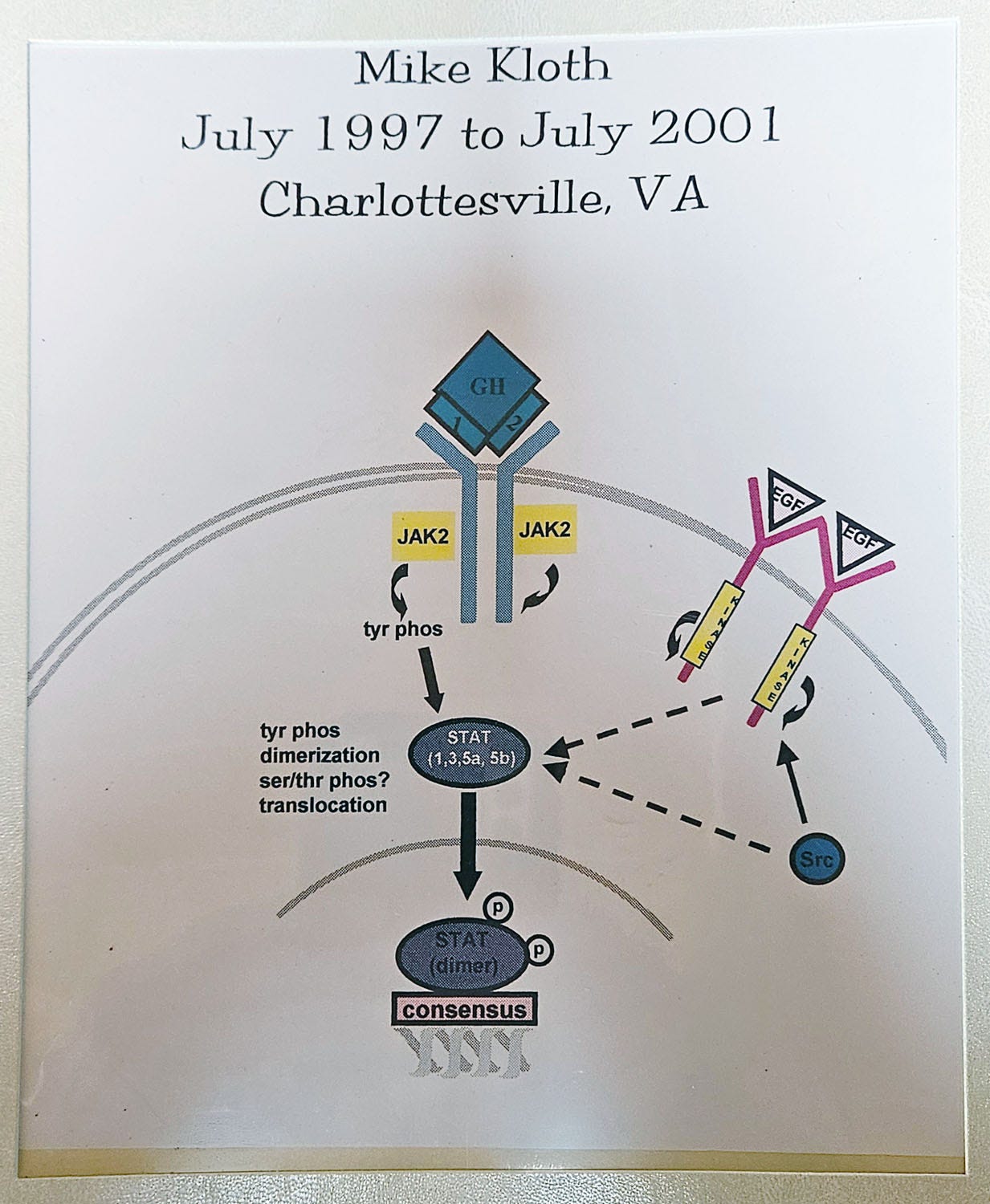
I also understood, by the end of those eight years, that it wasn’t what I was supposed to be doing.
That’s the part of the story I’ll leave mostly undeveloped here, because it deserves more space than an introductory issue can give it. What matters for now is that I left the bench with something I didn’t know I was carrying: a deep comfort with tools that are more powerful than they first appear, and a trained instinct to ask what the data actually shows rather than what you want it to show. That instinct turned out to be useful in ways I couldn’t have predicted.
The Pivot
I picked up a camera. Then I picked up another. I started volunteering at a local humane society - this was 2005 - less than a year before I opened my photography business. I couldn’t have told you at the time why the shelter work felt so connected to the photography work. It just did.
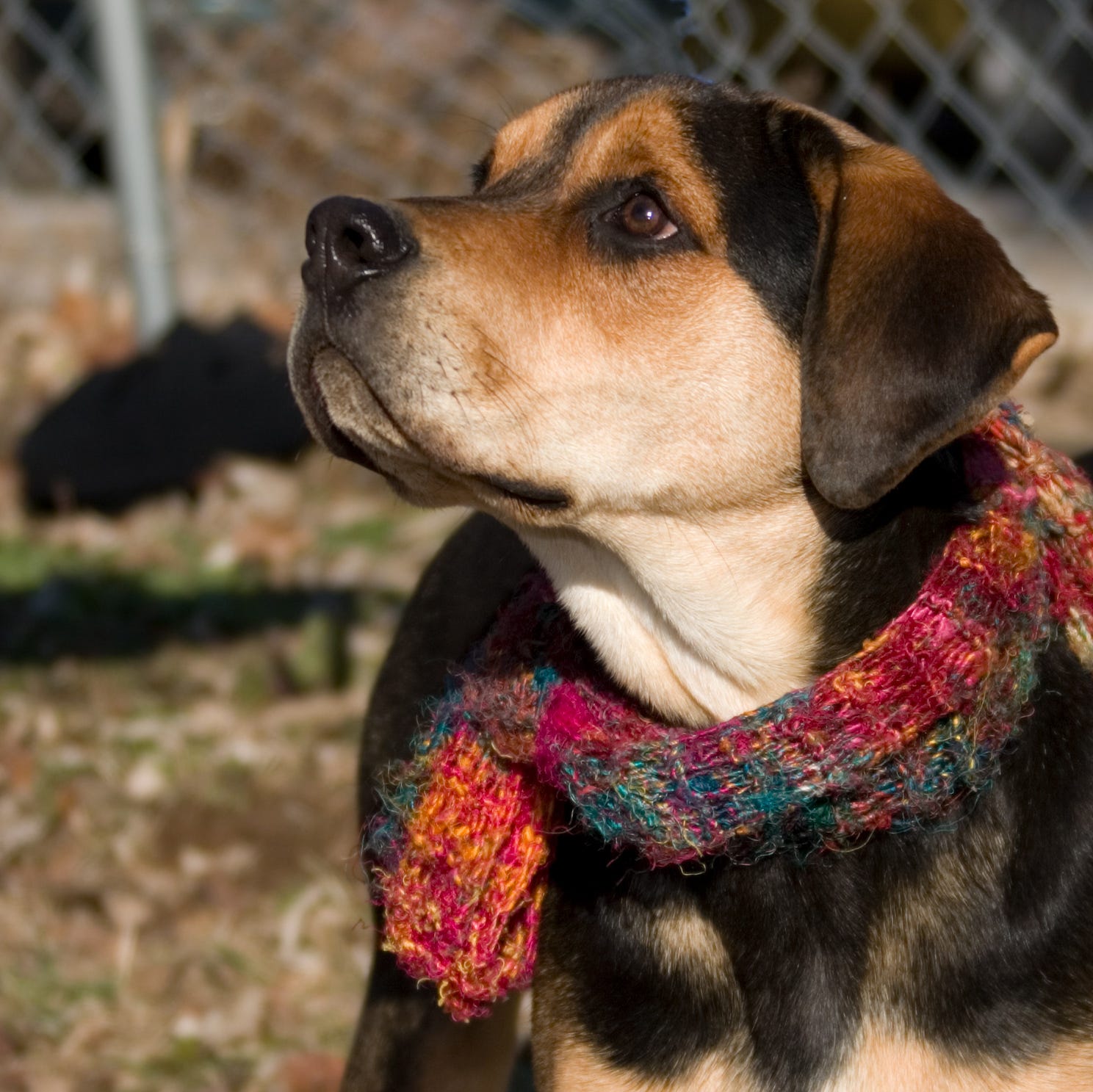
What I could tell you is that photographing shelter animals is an education in patience, in reading a subject, in earning trust quickly from someone who has no particular reason to give it to you. An anxious dog in a shelter run doesn’t care about your equipment. A frightened cat doesn’t care about your MFA. You either understand how to create safety in front of the camera or you don’t, and the animal will tell you which one is true in about four seconds.
I built a portfolio from that work. That portfolio became my graduate school submission. I got into the Academy of Art University in San Francisco, completed my MFA in Photography, and wrote a thesis project centered on shelter animals. The thesis became two books, published by Merrell Publishers: Shelter Cats in 2010, Shelter Puppies in 2011.
By the time those books were out, I had also built a photography business that moved with me across three states. Kentucky first, where it started in 2006. Then Washington, where I taught as an adjunct professor of fine arts at Washington State University. Then Tucson, in 2011, where I’ve been ever since.
Adding the Suit and Tie Work
At some point along the way, I started photographing executives. It seemed like an odd addition to a career built on animals, and more than one person said so.
Here’s what I noticed: it wasn’t odd at all. The same skill that lets me photograph a dog who doesn’t want to be there also lets me photograph a CEO who doesn’t want to be there. Reading a subject. Moving slowly enough to build comfort. Understanding what authentic looks like as opposed to performed. Knowing when to make a joke and when to just let the silence work. A nervous executive and a shelter dog are not the same thing, obviously. But the underlying skill isn’t as different as it looks from the outside.
That overlap is real, and it’s been good for the business. I’ll write about it more specifically in a later issue, because the mechanics of it - the actual techniques that transfer - are worth a detailed conversation.
On Being Told the Industry Is Ruined
I opened my photography business in January 2006. Digital SLRs were new. Film photographers were predicting the end of professional photography, because now anyone could take a hundred exposures without paying for film and something would come out usable. The barriers were collapsing. The industry was ruined.
It wasn’t ruined.
Then the iPhone arrived in 2007. Suddenly everyone had a decent camera in their pocket at all times. The barriers collapsed further. The industry was ruined again, and this time surely it would stick.
It didn’t.
What actually happened, both times, was that photography bifurcated. The lowest tier of the market, the work that was always just documentation with no particular craft or intention behind it, got absorbed by the new technology. The work that required judgment, relationship, artistic vision, or technical expertise that went beyond point-and-shoot - that work found its level. The market sorted itself. The photographers who stayed in business were the ones who understood what technology could and couldn’t replace.

I’ve watched this cycle twice. Now it’s happening a third time, and the technology is more disruptive than a new camera sensor or a smartphone. The conversation this time is louder, faster, and considerably more anxious.
Nine Months Ago
Last summer, I started using AI tools in a serious and systematic way inside my photography business. Not to generate images. To run the business: research, content strategy, drafting, workflow documentation, SEO. I’d dipped a toe in earlier, but six months ago I committed.
It changed things. It continues to change things. Not in the way the anxious corner of the internet describes, where AI arrives like a demolition crew and levels everything in its path. More like acquiring a genuinely capable collaborator who works very fast, has read more than any human ever could, gets some things exactly right, gets other things confidently wrong, and requires real editorial judgment to use well.
That last part is important. The judgment doesn’t go away. It moves to a different place in the process.
How Fast This Is Actually Moving
I want to close with a single story, because it illustrates something that pure argument can’t quite capture.
In November 2025, an Austrian software developer named Peter Steinberger published a side project on GitHub. He called it Clawdbot - a weekend experiment in AI agents, the kind of tool that doesn’t just answer questions but actually does things: reads your email, schedules your calendar, posts to Slack, orders dinner. He described it as a playground project.
By late January 2026 - roughly ten weeks later - it had nearly 200,000 GitHub stars and two million users a week. By mid-February, Sam Altman had confirmed that Steinberger was joining OpenAI to build the next generation of personal agents, with both Meta and Microsoft having also come calling. The project had gone from weekend experiment to one of the most-watched open-source projects in the world in about ninety days.
That’s not a normal product arc. That’s not even a fast startup arc. That’s a measurement of the current velocity of this technology - how quickly something that didn’t exist can become something that reshapes a market.
The photographers who position themselves well for what’s coming are the ones paying attention right now, while the conversation is still unsettled and the methodology is still being built. Not because AI is going to replace photography - I’ve watched two technologies that were going to replace photography fail to do so. But because the photographers who understood digital, and then understood mobile, ended up with durable businesses. The ones who waited to see what would happen ended up catching up at a disadvantage.
You can wait for the steam train to pass and decide later if it was worth boarding. That’s a reasonable choice if you’re close enough to retirement that it doesn’t much matter. The rest of us need to figure out how to climb aboard while it’s moving.
That’s what this newsletter is for. Let’s get started.
Michael Kloth is an MFA-trained, CPP-certified photographer based in Tucson, Arizona, specializing in executive headshots and fine art pet photography. He has volunteered as a photographer for Woodford Humane Society (Kentucky), the Benton-Franklin Humane Society and the Tri-Cities Animal Shelter (Washington), Pima Animal Care Center and the Humane Society of Southern Arizona (Arizona) for a combined 21 years.